|
I am interested in autonomous driving and Embodied robotics. My current research focuses on: |
|
|
|
|
*Equal contribution †Project leader/Corresponding author. |
|
|
🚙 Stereo Matching
|
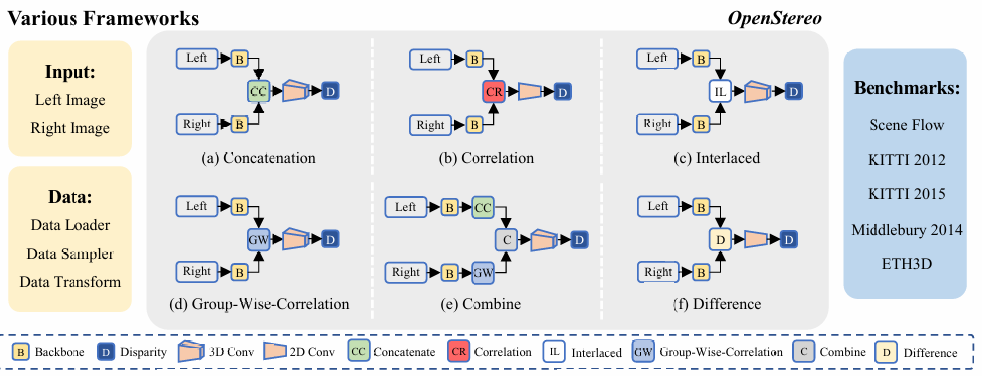
Xianda Guo, Chenming Zhang, Yiqun Duan, Youmin Zhang , Wenzhao Zheng, Matteo Poggi, Zheng Zhu, Qin Zou, Jiwen Lu† arXiv, 2024. [Code] OpenStereo includes training and inference codes of more than 10 network models, making it, to our knowledge, the most complete stereo matching toolbox available. |
|
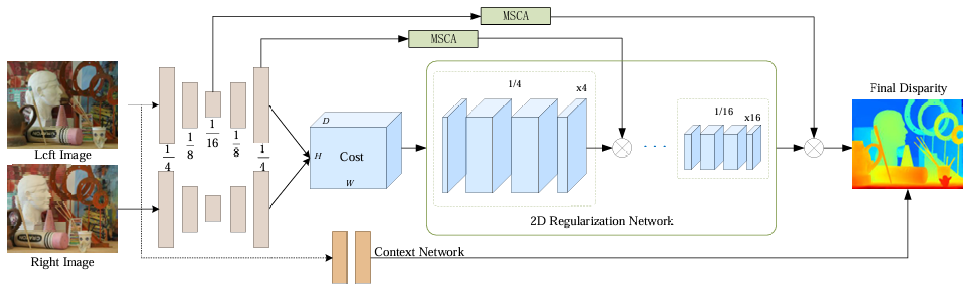
Xianda Guo*, Chenming Zhang*, Youmin Zhang , Wenzhao Zheng, Dujun Nie , Matteo Poggi, Long Chen ICRA, 2025. [arXiv] [Code] We present LightStereo, a cutting-edge stereo-matching network crafted to accelerate the matching process. |

|
Xianda Guo, Chenming Zhang, Pinhan Fu, Ruilin Wang, Youmin Zhang Dujun Nie, Wenzhao Zheng, Matteo Poggi, Hao Zhao, Mang Ye, Qin Zou arXiv, 2025. [arXiv] [Code] We introduce a novel synthetic dataset that complements existing data by adding variability in baselines, camera angles, and scene types. We extensively evaluate the zero-shot capabilities of our model on five public datasets, showcasing its impressive ability to generalize to new, unseen data. |
|
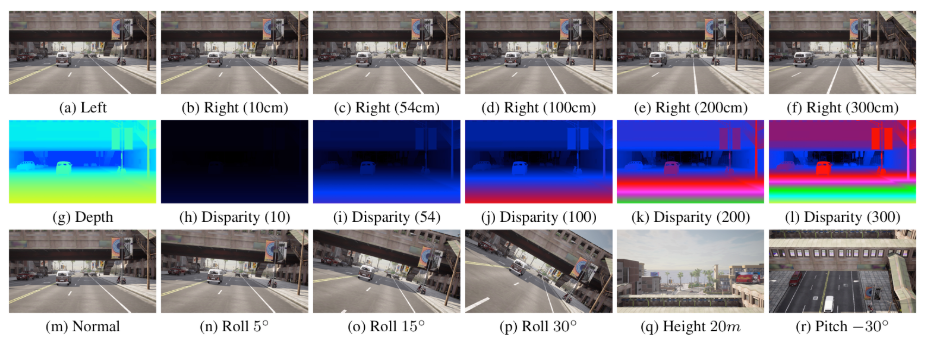
Xianda Guo, Ruilin Wang, Qian Zhou, Youmin Zhang Wenzhao Zheng, Matteo Poggi, Hao Zhao, Qin Zou arXiv, 2025. [arXiv] [Code] We present StereoCarla, a high-fidelity synthetic stereo dataset specifically designed for autonomous driving scenarios. Built on the CARLA simulator, StereoCarla incorporates a wide range of camera configurations, including diverse baselines, viewpoints, and sensor placements as well as varied environmental conditions such as lighting changes, weather effects, and road geometries. |
|
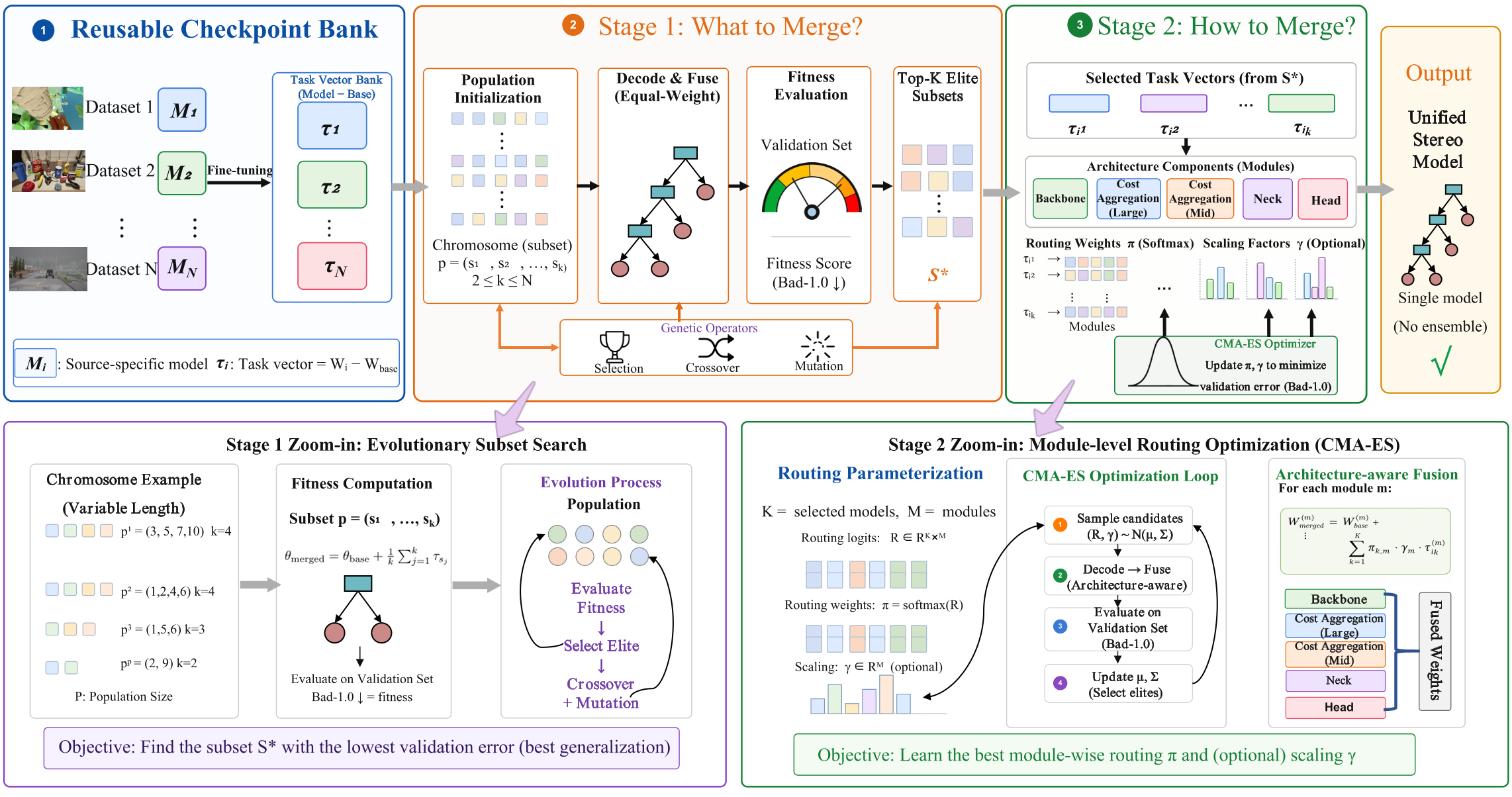
Xianda Guo, Pinhan Fu, Ruilin Wang, Wenke Huang Mang Ye, Qin Zou arXiv, 2026. [arXiv] [Code] We propose StereoFactory, a coarse-to-fine evolutionary framework for adaptive model merging. Stage~1 employs a genetic algorithm to search the combinatorial space of model subsets, determining which models should participate. Stage~2 addresses module-level knowledge specialization (different functional modules exhibit distinct preferences for knowledge sources) through CMA-ES optimization of architecture-adaptive routing over the selected task vectors, with optional module-level scaling. |
|
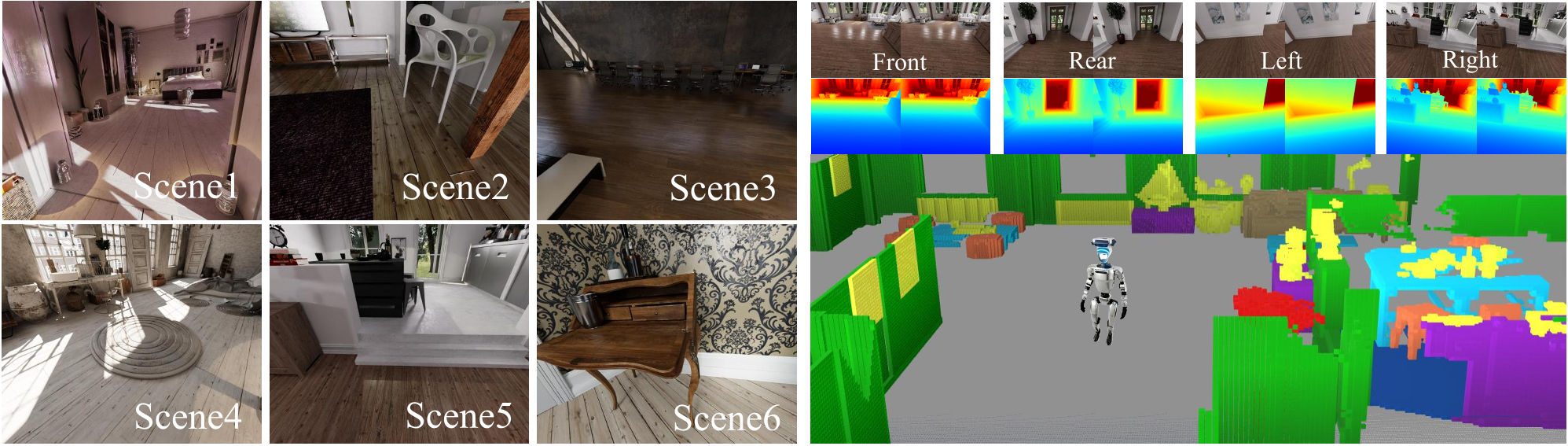
Xianda Guo, Bohao Zhang, Chenwei Huang, Shiyuan Chen, Ruilin Wang, Yiqun Duan Cong Yang, Qin Zou, Wei Sui arXiv, 2026. [arXiv] We present Humanoid-OmniOcc, a large-scale panoramic stereo-based occupancy dataset tailored for humanoid robots. And we further propose Humanoid Surround Stereo-guided Occupancy model that exploits robust depth priors for accurate 2D-to-3D lifting. |
🚙 Depth Estimation:
|
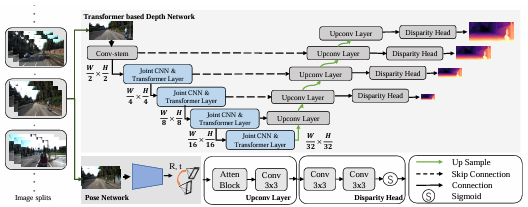
Chaoqiang Zhao *, Youmin Zhang*, Matteo Poggi, Fabio Tosi, Xianda Guo, Tao Huang, Zheng Zhu, Guan Huang, Tian Yang , Stefano Mattoccia 3DV, 2022. [arXiv] [Code] In light of the recent successes achieved by Vision Transformers (ViTs), we propose MonoViT, a brand-new framework combining the global reasoning enabled by ViT models with the flexibility of self-supervised monocular depth estimation. |
|
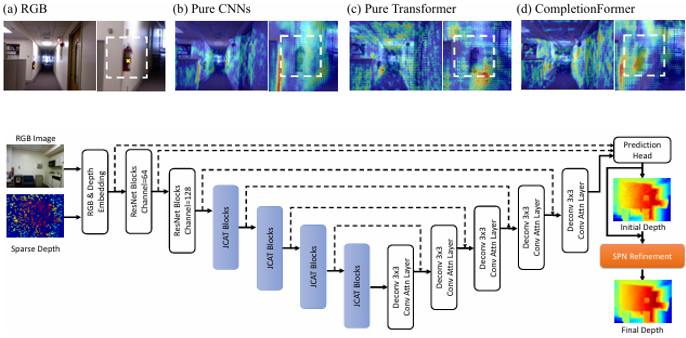
Youmin Zhang, Xianda Guo, Matteo Poggi, Zheng Zhu, Guan Huang, Stefano Mattoccia CVPR, 2023. [arXiv] [Code] This paper proposes a Joint Convolutional Attention and Transformer block (JCAT), which deeply couples the convolutional attention layer and Vision Transformer into one block, as the basic unit to construct our depth completion model in a pyramidal structure. |
|
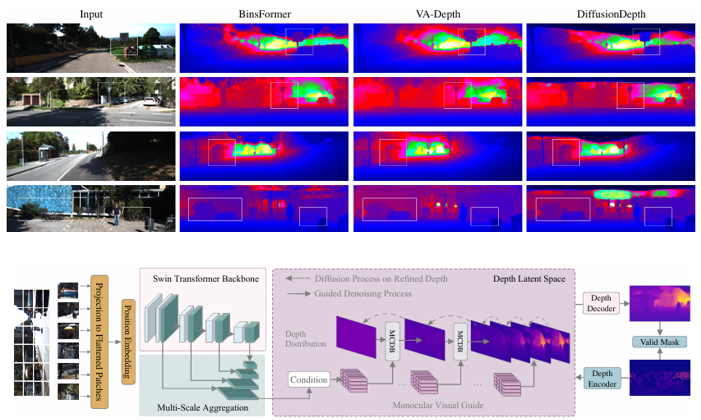
Yiqun Duan, Xianda Guo†, Zheng Zhu ECCV, 2024. [arXiv] [Code] We propose DiffusionDepth, a new approach that reformulates monocular depth estimation as a denoising diffusion process. It learns an iterative denoising process to `denoise' random depth distribution into a depth map with the guidance of monocular visual conditions. |
🚙 Autonomous Driving
|
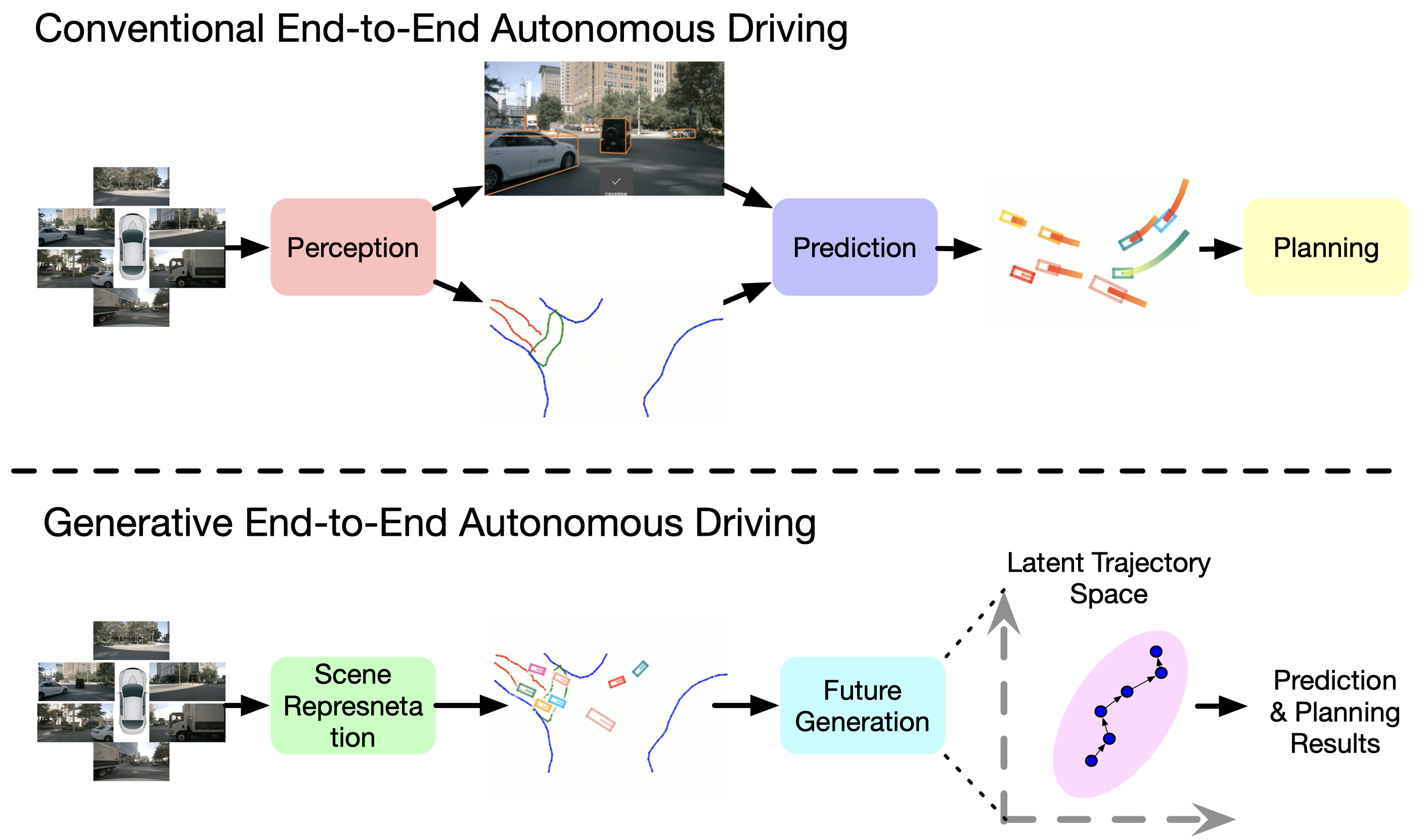
Wenzhao Zheng*, Ruiqi Song* , Xianda Guo*†, Chenming Zhang , Long Chen ECCV, 2024. [arXiv] [Code] GenAD casts end-to-end autonomous driving as a generative modeling problem. |
|
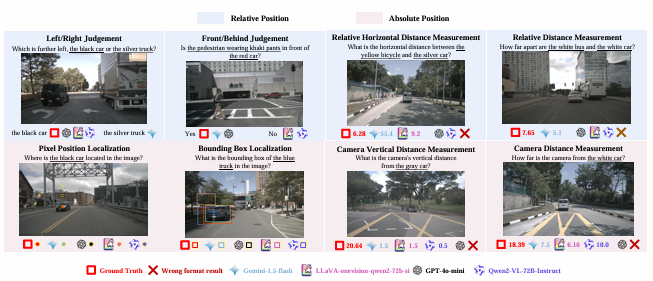
Xianda Guo*, Ruijun Zhang* , Yiqun Duan* , Yuhang He , Dujun Nie , Wenke Huang , Chenming Zhang , Shuai Liu, Hao Zhao, Long Chen NeurIPS, 2025. [arXiv] [Code] We introduce SURDS, a benchmark specifically designed to evaluate the spatial understanding capabilities of multimodal large language models (MLLMs) in autonomous driving. |
|
|
|
|